
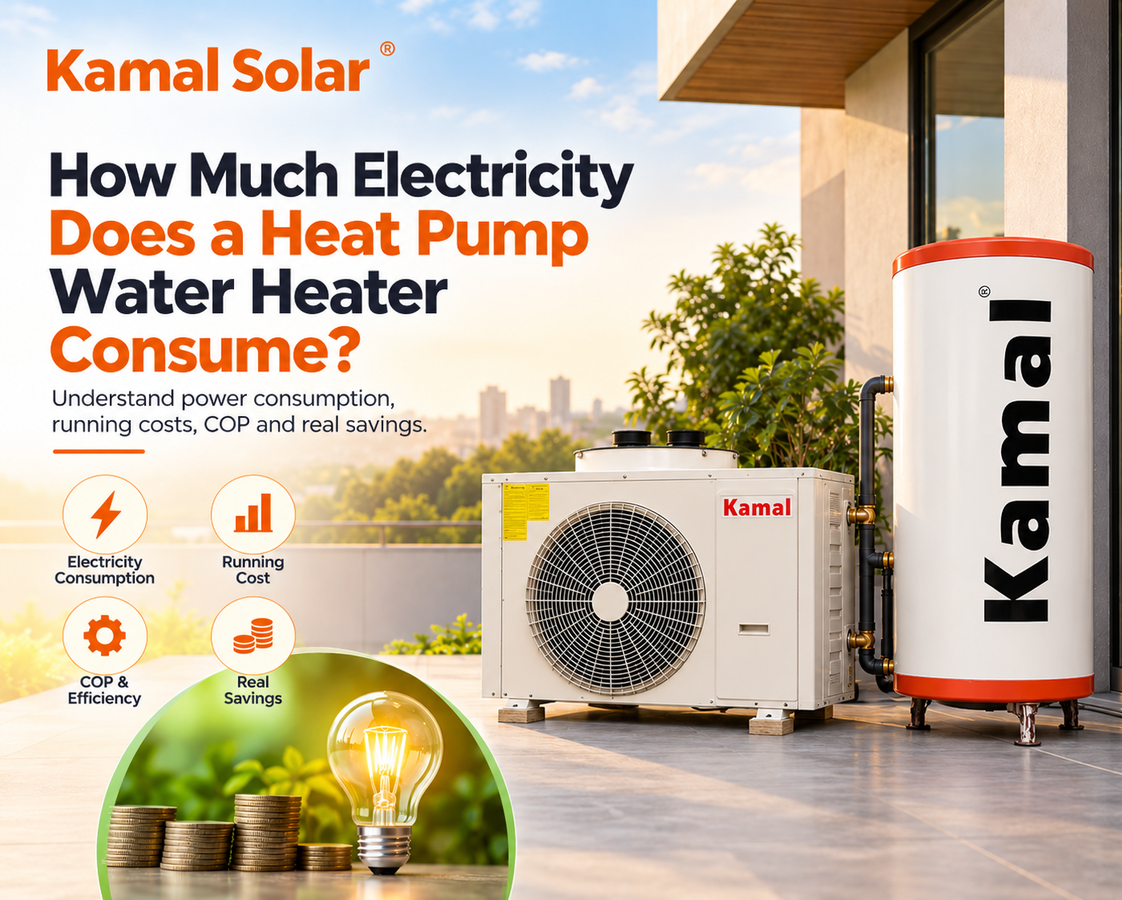
Heat pump water heaters are becoming an increasingly popular choice for homes, hotels, hospitals, hostels, apartments, and commercial buildings. They provide reliable hot water while helping reduce electricity consumption compared with conventional electric water heaters.
One of the most common questions buyers ask is: How much electricity does a heat pump water heater consume, and what does it cost to run every day?
The answer depends on several factors, including the heat pump’s heating capacity, hot water demand, ambient air temperature, required water temperature, insulation, and operating hours.
In this guide, we explain heat pump electricity consumption, power consumption, running costs, and practical ways to improve efficiency.
1. How Does a Heat Pump Water Heater Consume Electricity?
An air source heat pump extracts heat from the surrounding air and transfers it to water using a refrigeration cycle. Electricity powers the compressor, fans, pumps, and control system.
Unlike a conventional electric water heater, which converts electricity directly into heat, a heat pump transfers heat from the air into the water. This allows it to deliver more thermal energy than the electrical energy it consumes.
For example, a heat pump operating at a COP (Coefficient of Performance) of 4 can deliver approximately 4 kWh of heat for every 1 kWh of electricity consumed under those operating conditions.
Actual performance varies with ambient temperature, water temperature, and system design.
2. How Much Electricity Does a Heat Pump Water Heater Consume?
Electricity consumption depends on the amount of hot water required and the heat pump’s actual efficiency.
The basic formula is:
Electricity Consumption (kWh) = Heat Energy Required (kWh) ÷ COP
For example, if a system requires 20 kWh of useful heat and operates at a COP of 4:
20 ÷ 4 = 5 kWh of electricity
This means the system consumes approximately 5 units of electricity to deliver 20 kWh of heat, assuming the stated COP applies to the operating conditions.
Example of Daily Electricity Consumption
| Useful heat required per day | COP | Electricity consumption |
| 10 kWh | 4 | 2.5 units |
| 20 kWh | 4 | 5 units |
| 30 kWh | 4 | 7.5 units |
| 40 kWh | 4 | 10 units |
These are illustrative calculations, not guaranteed consumption figures for a particular model.
One electricity unit equals 1 kWh.
3. What Is Heat Pump Power Consumption?
Heat pump power consumption refers to the electrical power drawn while the unit is operating. It is measured in kilowatts (kW).
Electricity consumption, on the other hand, is measured in kilowatt-hours (kWh) and depends on both power and operating time.
For example, if a heat pump draws an average electrical power of 2 kW and runs for 3 hours, its electricity consumption is:
2 kW × 3 hours = 6 kWh, or 6 units
The actual electrical input varies depending on the model, compressor operation, ambient conditions, water temperature, and whether auxiliary electric heating is used.
A heat pump’s heating capacity in kW or its hot water output in litres per hour (LPH) should not be confused with its electrical input power.
4. How Much Does a Heat Pump Water Heater Cost to Run?
The running cost depends on electricity consumption and the electricity tariff.
Running Cost = Electricity Consumption × Electricity Tariff
For example, assuming an illustrative electricity tariff of ₹8 per unit:
| Daily consumption | Daily cost | Monthly cost (30 days) |
| 3 units | ₹24 | ₹720 |
| 5 units | ₹40 | ₹1,200 |
| 8 units | ₹64 | ₹1,920 |
| 10 units | ₹80 | ₹2,400 |
These examples use a hypothetical tariff of ₹8 per unit. Your actual bill will depend on your electricity tariff, usage, and other applicable charges.
To estimate your own running cost, determine the daily electricity consumption and multiply it by your applicable tariff.
5. What Factors Affect Heat Pump Electricity Consumption?
Several factors influence the electricity consumed by a heat pump water heater.
Ambient Air Temperature
Air source heat pumps extract heat from outdoor air. Warmer ambient air generally allows the system to operate more efficiently, while colder conditions can increase electricity consumption.
Required Hot Water Temperature
Producing water at higher temperatures requires a greater temperature lift. Heating water to 60°C may therefore consume more electricity than heating it to a lower temperature under otherwise comparable conditions.
Daily Hot Water Demand
Hotels, hospitals, hostels, and large residential buildings often require substantial amounts of hot water. Higher demand generally increases total daily energy consumption.
Heat Pump Capacity
The appropriate capacity depends on the required hot water volume, the incoming water temperature, the target temperature, and the available recovery time. Selecting an undersized or oversized system can affect performance and operating costs.
Storage Tank Insulation
Good tank insulation reduces standby heat loss and helps maintain the required water temperature with less additional heating.
Installation and Maintenance
Correct installation, suitable airflow, clean heat exchangers, appropriate pipe insulation, and regular maintenance help the system operate efficiently.
6. How Can You Reduce Heat Pump Running Costs?
You can improve operating efficiency by following these practical measures:
- Select a heat pump sized correctly for your daily hot water demand.
- Use a well-insulated storage tank and insulated hot water pipes.
- Ensure adequate airflow around the outdoor unit.
- Maintain the heat pump according to the manufacturer’s recommendations.
- Avoid unnecessary reheating and excessive hot water wastage.
- Choose suitable operating schedules based on actual hot water demand.
- Check whether auxiliary electric heating is operating more frequently than expected.
- Compare performance data at the ambient and water temperatures relevant to your installation.
For commercial applications, an energy assessment can help estimate the expected electricity consumption and determine the most suitable heat pump configuration.
7. Is a Heat Pump Water Heater More Economical Than a Conventional Electric Heater?
A heat pump can be more economical because it transfers heat from the air rather than relying entirely on direct electrical resistance heating.
For example, to deliver 20 kWh of useful heat, a conventional resistance heater would require approximately 20 kWh of electricity, excluding standby losses. A heat pump operating at a COP of 4 would require approximately 5 kWh under the same assumed useful-heat requirement.
In this simplified example, the heat pump uses 75% less electricity for the same amount of useful heat.
Actual savings depend on the heat pump’s real-world COP, the conventional heater’s efficiency, hot water demand, installation conditions, and operating costs.
8. Choosing the Right Heat Pump for Your Application
The right system depends on the quantity of hot water required and the speed at which it must be replenished.
Kamal Solar offers heat pump solutions for residential and commercial hot water applications, including systems designed for hotels, hostels, hospitals, apartments, and other facilities with substantial hot water requirements.
When selecting a system, consider:
- Daily hot water demand
- Required water temperature
- Heat pump output and recovery time
- Storage tank capacity
- Expected ambient temperature
- Available electrical supply
- Installation space and operating conditions
A properly selected and installed heat pump can help reduce electricity consumption while providing dependable hot water for everyday use.
Conclusion
Heat pump electricity consumption depends on the heat required, the system’s actual COP, ambient temperature, target water temperature, and usage patterns.
Understanding these factors helps homeowners and commercial building operators estimate heat pump power consumption, calculate running costs, and choose an appropriate system.
For accurate estimates, use the manufacturer’s performance data for your required operating conditions rather than relying on a single assumed COP.
Explore Kamal Solar heat pump solutions to find a suitable hot water system for your residential or commercial requirements.